
FAQ
FAQ - General
01 | What is rubber band made of?
GeneralMain material is “rubber”, usually natural rubber, but some types of synthetic rubber are also used to obtain certain specific quality depending on the application and requirements. Besides, fillers such as calcium carbonate, carbon black, clay and additives like sulphur, stearic acid, zinc oxide, wax, oil, accelerators are mixed into rubber as ingredients.
02 | Can I get rubber bands in different colour?
GeneralYes, we offer a variety of colours to help with color-coding, organizing, or matching your specific packaging needs.
03 | Are standard and custom sizes available?
GeneralYes. We offer a wide range of standard sizes and can also produce exact custom dimensions using highly precise metal tooling.
04 | Will the bands leave marks or residue on items?
GeneralNo, our high-quality rubber bands provide a clean, secure hold without leaving stains or sticky residue behind.
05 | Is the rubber band reusable?
GeneralYes. They retain high elasticity and will naturally snap back to their original shape for multiple uses.
06 | Are these items always ready in stock?
GeneralWe maintain ready stock for many of our popular standard items. Larger bulk requests may require a standard lead time to prepare.
FAQ - Technical
01 | What is natural rubber?
TechnicalNatural rubber used for making rubber band manufacturing is in block form produced from latex emulsion collected from rubber tree called Hevea Brasiliensis. These plants are planted in very large scale in tropical countries such as Thailand, Indonesia and Malaysia.
02 | Why rubber has to be vulcanized?
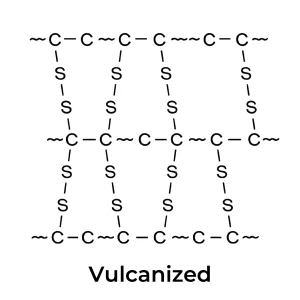
TechnicalNatural rubber itself is soft, less resilient, easily break when over stretched and unable to return to the original shape after being stretched. Moreover, it is easily damaged by heat, sunlight, oil, oxygen and solvent. During a process called vulcanization, the sulphur molecule becomes a bridge between rubber molecules and forms a three-dimensional network with help of other ingredients (just like fishing net made of many lines of thread). This network improves the above weaknesses of natural rubber for practical use. Generally, the higher the rubber content, the higher the resilience and elasticity.
03 | What is happening inside rubber during vulcanization?
TechnicalAt the vulcanizing temperature (practically, 140-200°C), a complex chemical reaction starts to occur and leads to the formation of sulphur crosslink as shown schematically below:
04 | What is CEC’s “Latex Free Rubber Band”?
TechnicalCEC’s Latex Free rubber band is made of a type of solid synthetic rubber which does not contain natural rubber just as gloves made from liquid synthetic rubber (called “Synthetic Latex”) such as nitrile latex.
Word “Latex Free” is often used to mean “Not made from natural rubber latex” or “Not contain natural rubber” in order to indicate indirectly “No risk of latex protein allergy”.
Natural rubber contains a series of water soluble or extractable proteins (called “EP”) which were reported to be a cause of allergy to the human body when contacted over a long period.
Particular attention was bought up over the use of surgical and examination gloves. As these thin rubber gloves are commonly manufactured using natural rubber latex which collected from rubber trees, they are called “Latex Gloves”.05 | Can CEC natural rubber band used for human contact?
TechnicalYes, CEC rubber bands are considered safe in term of protein allergy for non-medical application because they are made of solid (dry) natural rubber and are further washed in steam and fresh water at the final stage of rubber band production in CEC.
06 | What is the allowable extraction protein (EP) content level for safety against latex allergy?
TechnicalAlthough no definite figure has been officially announced by any international organization yet, it is generally known that EP content lower than about 100 mg/g does not cause allergy except for hypersensitive person.
07 | Why choose UV- resistant rubber bands
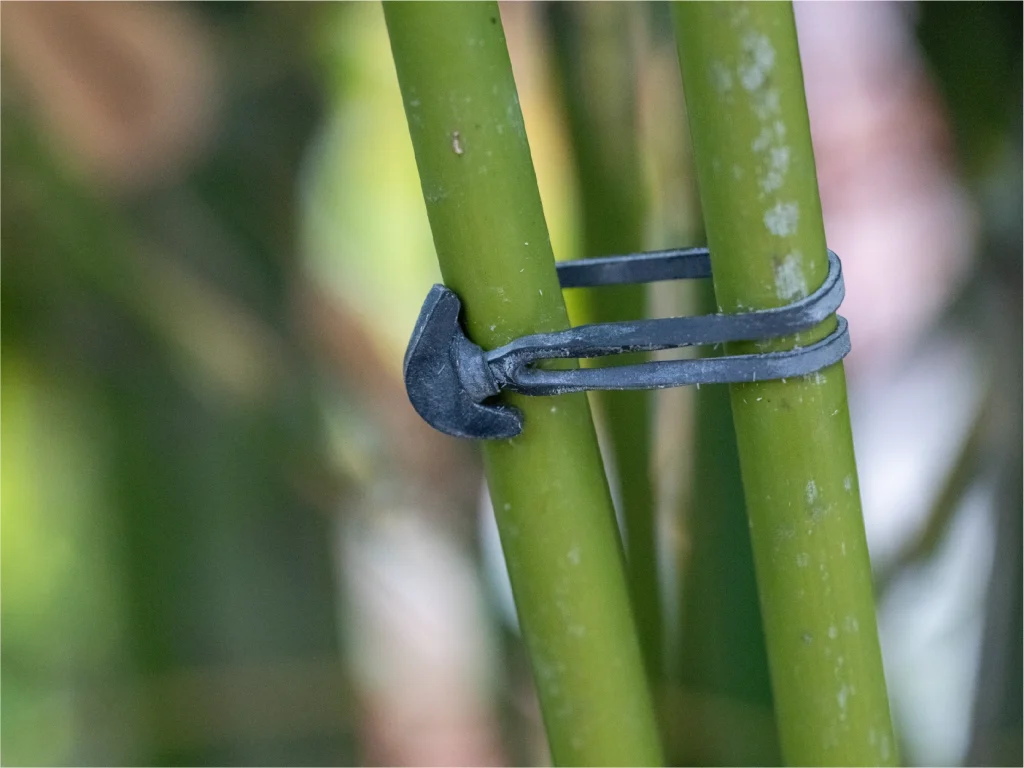
TechnicalStandard bands can dry out outside. Our UV-resistant bands are specially formulated to withstand outdoor sunlight and weather without snapping.
FAQ - Storage
01 | How should rubber band be stored?
StorageProducts made of natural rubber are, in general, aged faster by exposure to heat, air and sun light. Therefore, rubber bands should be packed, preferably in air tight bag or container, and stored in cool and dark place for securing longer life.
UV Resistant Band
Bring Us Your Ideas
Have an idea? Let’s make it happen.